Canada Used Fake Real Estate Statistics to Spur Borrowing

How Canada Used Fake StatsTo Drive Real Estate Borrowing

Canada Used Fake STATS In Real Estate

Fake news has made sure that you cannot differentiate between an expert opinion, personal opinion, and authority opinion. If the reports go by, the real estate boom experienced in the last 12 months could be an engineered wave.

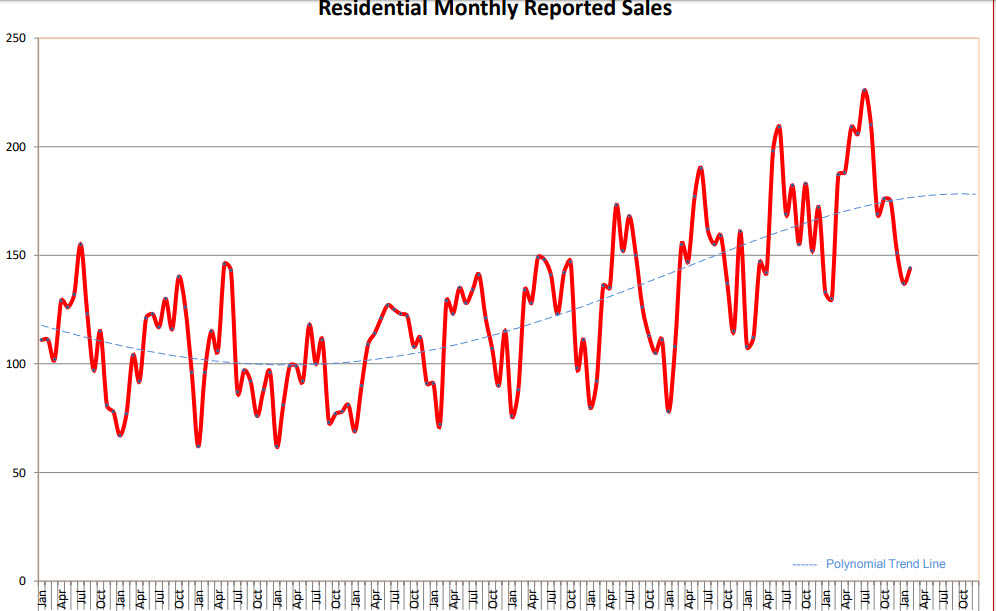
By June 2017, various government sources mostly OFSI, Canadians have borrowed $266 billion against residential property. That was an abnormal increase considering that such an increase happened last in 2012 — the market then was recovering after the economic crisis of the late 2000s. This change represents a 5% increase from last year. Curiously, it coincides with a period the government and the media are accused of manipulating the property market. It is not a new phenomenon though, as at least 30 governments around the world are actively using the World Wide Web to manipulate public opinion and perception. Canada, which did not make it in that list initially, finds itself in unfamiliar territory with these allegations. According to one source, they are not allegations. The government is actively buying curated content from media outlets to ‘inform’ the public.


Widespread Misinformation


Various departments have used taxpayer’s money to pay curated content companies such as News Canada and Fifty Stories to promote or generate certain opinions. Statistics Canada used over $60,000 to distribute several pieces about trends in the real estate sector. It would cost the same institution virtually nothing had it released the information through their official website, but they did not. Something does not add up. Industry trends are well within their mandate, but they choose to inform citizens indirectly. Why would they do that? According to one report, countries such as Turkey, China, and Ukraine are using thousands of online troops to guide public perception. Could Canada be doing it too? The evidence suggests that that is a real possibility.


The Facts


Last year, the Financial Consumer Agency of Canada (FCAC) also distributed content that promoted home equity as a crafty line of credit (HELOC). In fact, they said that it is a way of sorting your long-term financial goals. Well, though this line of thinking would be typical in a sales pitch, FCAC has nothing to sell.

They too should know better the repercussions of over speculation in the housing market. In fact, their role contradicts the use of HELOC as a way of avoiding bankruptcy. Recent surges in the home valuation in major cities remain unexplained. There is no economic explanation to the price surge. Even the 4.5% GDP growth announced in 2017 cannot explain the newfound wealth of real estate, and it certainly cannot tell why people are eager to borrow against these new values.


An article posted in Montreal Times, paid for by a government agency, encourages homeowners to use the overvalued residential property to create an ’emergency cache’ in case of job loss to cover regular expenses. The wisdom in that advice is questionable at best, as caps and interest rates on loans far outweigh interests paid on savings.  If you want to buy a home in Calgary, you will most likely go to a local Realtor. The long-term value of a house, irrespective of the economic cycles, should be consistent, but properties in major cities are swinging from 50% to 100%. If you sell a home at the current value, you can pocket the difference if you bought it sometimes back when the prices were almost 50% lower. The buyer can borrow against the current value, which may not be sustainable. If loans are used to lock people into their mortgages so that they don’t sell, that is akin to extortion, it would mean that the government knows that the current values are not sustainable in the long-run. If they are doing what they are doing with the best interests of Canadians at heart, then it is no biggie! If they are manipulating the public, that is not a problem; it’s a scandal.


Managing public interest is a government responsibility


Interest and exchange rates are some of the tools that governments have used to guide economic policy. In a country where every industry needs a serious stimulant, the options might be few.

Real estate industry will continue to be a big talking point. If you are buying a home that you can afford, it is a long-term investment that you can do anything with it. Again, borrowing to do something meaningful is encouraged. The problem arises when you borrow for fun, and you default. If the government is using untrue stories on the media, what would prevent authorizes from using bots and human social media swarms to manipulate real estate market?

On the overall, it would be a delicate balancing act for a new buyer to sieve through online content before making a decision.

The Importance of Curb Appeal

how curb appeal affects selling your home

The Importance of Curb Appeal – From A Cocoa Beach Resident


Any house, be it in a metropolitan city or a rural land, needs to have a curb appeal in order to sell. Experienced Realtors know this very well. This is a lesson to learn from the very moment you put your house up for sale, and I learned it the hard way.


I own a property in Cocoa Beach, home to around 12,000 people and a tourist spot to nearly 3 million visitors from around the world. This place is fascinating in its own way. There are many places to relax during your leisure time apart from the beach pier, including but not limited to, Alan Shepard beachfront park, Cocoa Beach Aquatic Center and Pool Complex and Thousand Islands Conservation Area. And if you are one of those planning to relocate to Cocoa Beach permanently, there are many houses that are up for sale just like mine. Some of the houses are ready to be occupied and others need serious upgrades.


Lessons Learned


I had yearned to live the beach life for years. What I learned from my Realtor who has more than three decades of experience in beach properties is that, curb appeal can go a long way at any time. On a Sunday night, after several weeks of putting this house on the market, I was talking to my agent about getting the price reduced since there were hardly any offer at the time. I was feeling down and out because of the urgency of this move. I thought having the price reduced may make potential buyers willing to listen to the offer. After all, buyers are looking for deals and are more receptive to reduced price. My agent suggested that I improve the curb appeal and not to wait too long to get it done, to stay in tune with other neighboring homes.


I agree, that this house needs to be upgraded on the outside. It needs a cleaning crew, probably a landscape architect to uplift the mood it is bringing right now. Though it’s closer to beach and all the perks that living in Cocoa Beach offers to its residents, not having the desired curb appeal is just as bad as selling a house during the recession. My real estate agent has years of experience with this type of homes in the area. Although built recently and in an upscale neighborhood and despite all the modern features in every room inside, the front and back yard lacks the charm. It’s plain with no vegetation or design element.


“I’m sorry but your yard looks plain and boring. Imagine that someone who wants to buy a home has looked at a dozen houses around and is a little tired by the time he or she is at your driveway. But when they drive up and see nothing in the yard, they might feel discouraged to explore what is inside”.

said the agent.


In fact, he proceeded to say that this kind of thing has happened to him numerous times. And I totally get it, that my agent is not trying to interfere. Right now, I have got a lot on my mind, but this thing needs immediate attention.


Real Estate Stories


I have heard stories and seen real estate statistics from my agent about how hard it is to sell a home that is customized and built according to individual tastes. What piqued my interest is about a story where the buyer was particularly looking for a house that was pet free from the time it was built. He said one of his clients had a houseful of pets. It literally looked like a zoo where people had to walk on the limited space due to hutches and cages occupying most of the rooms. The owner later closed the zoo, but the house still smelled like it. The asking price had to be reduced even after many attempts to make the place odor free. The buyers had a sharp nose despite the baking cinnamon cookie in the oven.


The lawn of my front yard with 100 square feet of sod from the local nursery is looking great. They are going to be mowed, weeds eliminated but it’s not that hard of a labor and surprisingly cheap. Two weeks into the yard renovation and the agent has brought four offers that look enticing. What a difference it makes!


The US Housing Market

housing market statistics

Real Estate Market Stats

As a company that specializes in real estate data, we felt it only appropriate to put forth some nationwide real estate statistics.  We would like to be clear, these ARE NOT the statistics that we provide for our clients.  The real estate metrics we provide for our clients are directly pulled from the local MLS and augmented with public and 3rd party data to compile a unique picture of your specific real estate market.

Updated for 2020

We have updated our State of the Real Estate Market for 2020 and can read it here.

Housing Market Slowdown

The U.S. housing market may be headed for a slowdown in the latter half of 2018, according to data from the U.S. Commerce Department, although the economy is shown to be growing. In the second quarter of 2018, the U.S. economy grew by 4.1 percent, the fastest rate of economic growth since 2014. The economy boom may cause confusion for buyers and sellers regarding why the housing market may be showing signs of trouble. The slowdown in the housing market could be caused by a number of reasons.  

The recent hurricanes in Florida have the September real estate statistics going wild, but we intend for that to slow down and continue to grow as federal, state and insurance money flows into the state.

Rising Mortgage Rates Means a Higher Home Price

Many people who want to buy a home are seeing an increase in mortgage rates. A mortgage rate is the interest charge by a lender to provide a buyer with a mortgage to purchase a home. In July, the average interest for a fixed rate, 30-year mortgage increased from 4.54 percent to 4.52 percent. The rate increase is according to Freddie Mac, a mortgage buyer.

In addition to the mortgage interest rate increase, long-term loan rates are at a seven-year high. Rising mortgage rates mean many buyers can’t afford to buy the house they want. They may be priced out of the housing market altogether.

Mortgage Rates Rising, but Wages Stay the Same

The economy is booming and unemployment is lower than it’s been in years. However, wages are not increasing as fast as mortgage rates. When wages are adjusted for inflation, employee wages haven’t increased for approximately 10 years. This fact is also causing many potential home buyers to be priced out of the housing market.

There is Evidence the Hot Real Estate Market is Cooling

In July, housing market figures showed evidence the hot market may be cooling down. For example, existing home sales dropped again in June 2018, the third straight month in a row. The pace of new home purchases has also slowed. According to the U.S. Commerce Department, sales of single-family homes fell to 5.3 percent in June. This is the eighth straight month for the decline. In a stable housing market a balanced housing inventory would exhaust in about six months. The lack of current inventory would last about three to four months.

Home Sellers May have to Wait Longer to Sell 

A person who wants to sell a home may have to wait for a little longer for an interested buyer. Many buyers are now taking their time to purchase homes. They may bide their time to find an affordable home than purchase one they can’t afford.

Some Housing Markets in Major Cities are Still Hot

Many housing markets with expensive housing are noticing a faster slowdown than other cities’ housing markets. For example, in May, Boston moved up to number two on the hottest housing markets. We have seen increases in Savannah and Cocoa Beach Florida – but major swings in Wilmington because of the recent hurricane. Other major cities like Seattle are noticing a slowdown. The slowdown in the housing market may vary widely, depending on the particular city in question.

A Housing Market Slowdown Doesn’t Translate to a Housing Burst

At this time, there is no need panic about the housing market. Housing prices, which have increased because of a shortage of housing inventory, has began to level off. Other factors may cause potential home buyers to make a purchase instead of staying on the sidelines.

For instance, wages may increase or mortgage rates may decrease. A housing slowdown is a red flag that other factors are cooling the housing market. However, it is not an indication of a housing bubble on the horizon. In the current housing market, buyers are taking their time and sellers are still eager to unload their homes.

Get Unique Real Estate Statistics for Your Market

If you would like to get custom real estate statistics for your local real estate market, contact us for more details on what we can provide.