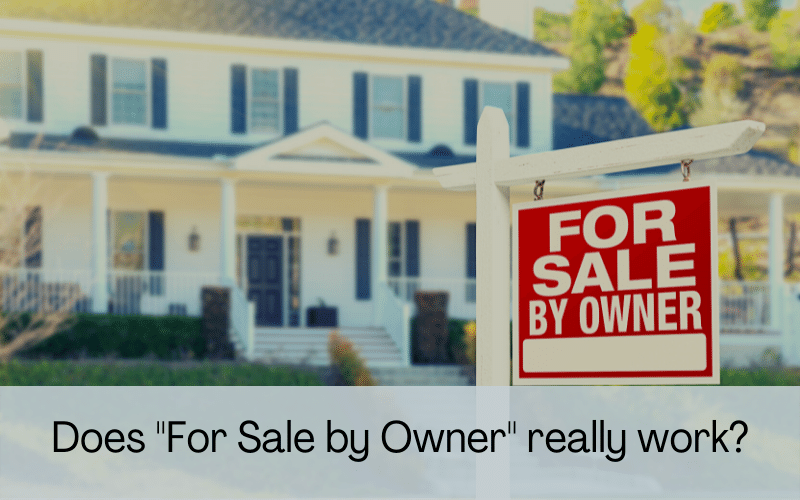
Selling For Sale By Owner can seem like an appealing alternative to traditional real estate agents/commission fees. But is FSBO really possible?
Let’s start with the statistics: Only 7% of sellers decided to sell their home for sale by owner in 2021, one percentage point more than the record low from the previous year.
FSBO is a serious undertaking. It requires a certain skill set, extensive research, and a lot of time. There’s no guarantee that you will sell your house for the price you want. This is why it is rare for people to choose this route.
We’ve identified the biggest obstacles that sellers face in FSBO and how they can be overcome to make it work for them. Bethany Culley is a top agent in Madison who has sold 71% more properties than the average Madison agent. She shares her experiences as a buyer’s representative working with FSBO sellers.
Here are 10 things you need to do if you want your house to be sold on its own.
1. Your pricing is precise and laser-point.
It is essential that you price your home slightly below its market value in order for FSBO to work. The most important factor in determining the sale speed and price of your home is its listing price.
You won’t have a real estate agent to help you find comparable homes for sale. Listing prices don’t count.
You leave money on the table if the price is too low
You could lose thousands to tens of thousands of dollars if you price your home at the low end of the estimated home value range. It is particularly difficult to find the optimal price point in nondisclosure areas where transaction sale prices are not publicly available. These cases are where you cannot gauge the property’s value using public tax records, which could completely miss it.
Culley explained: “If someone lives in their home for a long time, and they haven’t gone to an appraiser, because appraisals can be expensive, then you’re just going to tax them on what is lower than the market price.”
If you set a price too high, you’ll hear crickets
The flip side is that if your home is priced too high, it may remain on the market. Your listing may be overlooked if buyers are unwilling to negotiate a lower price. Your house will remain on the market until it is advertised for a price reduction.
This can cause buyers to wonder if there is something wrong with the property other than bad pricing.
2. You can pay for your own MLS Access and keep track of activity.
The MLS remains the king of the listing forest, despite the existence of a multitude of For Sale by Owner websites. The MLS was the top source of listings for sellers in 2021, listing 9 out of 10 homes.
Your property details will be automatically syndicated to major online listings sites when you list your house on the MLS. You will need to pay for access to the MLS as an FSBO seller.
- Flat-fee MLS Listing Service: These websites will list the home for a flat fee between $50 and $500.
- Agent who provides limited services: This agent will only post your listing to the MLS. They will not provide any additional services, such as setting up a lockbox or viewings.
They will not tell you that your listing price is significantly lower than the mark, share it with their social networks, or perform other support responsibilities as a traditional agent.
Once your listing is live, you are responsible for monitoring daily activity and responding to inquiries. (We’ll touch on communication shortly).
3. You are ready to navigate through a lot of legal landmines.
There are many laws that govern real estate. They vary from one state to the next and change frequently. If you violate a law unintentionally or breach a contract, your buyer may sue for it.
- For breach of contract, money damages
- Refund of deposit and payment of reasonable expenses to terminate the contract
- Specific performance of the agreement (i.e. You will be taken to court to finalize the sale of your home
Common FSBO errors include titling and documentation issues. 18% of FSBO sellers polled said that “insufficient knowledge about the paperwork” was the most challenging part of selling a home.
A real estate attorney can be hired for $150-350 per hour if you require assistance. However, many will charge a flat rate. After the seller and buyer have settled the price, the attorney will review the contract and any other paperwork.
Some states require the presence of a real estate lawyer to facilitate the sale. Even if your state doesn’t require one, it is worth considering hiring one to provide additional legal protection.
- Your title may be subject to involuntary judgments or liens
- You are selling on behalf of the deceased
- You are selling because of divorce or separation, and your co-owner is not cooperative
- The property is currently rented by tenants
4. You are confident in the disclosure laws of your state.
It is illegal in some states to paint over mold without naming it in the home disclosure. Missouri law requires you to disclose whether a child’s welfare is at risk due to physical injury sustained on your property.
If you don’t know, you should. Each state has its own disclosure laws. Sellers must list any known problems, such as mold, lead, or natural hazards, along with boundary line disputes. You must adhere to your state’s disclosure laws. Don’t try and hide the truth. This could cause your home to be sold.
Buyers can request seller repairs, additional credit, or even file a lawsuit if they discover unresolved problems. These disputes may not only cost extra, but can also delay, stop, or reverse the sale.

5. It is possible to be objective about your home.
It is a blessing to know your home better than anyone else. It’s possible to highlight the best aspects of your home and discuss details about property maintenance. Your biases can negatively impact your ability to sell your home and stage it.
“The owner sees the house through the eyes of a seller and thinks that it is great. The green shag carpet has not been damaged since I have lived here for 30 years. Culley says that although I don’t own a dog, it isn’t bad.
Your subjectivity could lead to you spending too much on home improvements that don’t return a high return. You might think your backyard patio is a necessity, but research shows that it only returns 47.6%.
It’s hard to tell the difference between too little improvement and too much without an objective market professional.
6. You have 200 additional hours to sell your house.
A real estate agent can take 20 to 200 hours to sell a house. With the additional time spent researching, it will likely take you twice as long to complete each step. This double-time is not enough to cover the absence of a real estate agent. As a seller, you’ll have to spend more time cleaning, repairing, maintaining your lawn, and painting.
7. You will answer every call, or risk losing agents who are looking to work with professionals.
If you decide to fly solo in real estate, there is a stigma that FSBO sellers can be unreliable. It is usually due to a few bad eggs ruining the group. However, even the most professional FSBO sellers have trouble responding to inquiries at the same speed as professional real estate agents.
You must prioritize answering phone calls, emails, and social media messages regarding your listing throughout your work week or you risk losing potential buyers. If you don’t answer a call or leave a voicemail, a buyer’s agent may not follow up and assume that you aren’t serious about selling.
If you wait more than a week to send an email, your buyer might be already negotiating for another home.

8. You are a skilled negotiator.
FSBO sellers can be their own advocates at the negotiation table. A professional who has been involved in hundreds of home negotiations is up against you. In 2021, 38% said their agent got a lower price, and 47% claimed they received better terms in sales contracts.
This is mostly due to sellers who have a discount real estate agent. If you aren’t used to negotiating high-stakes business agreements, your chances of winning the deal will be slim.
9. Selling your house for less is acceptable.
FSBO properties are sold at a lower price than other homes. This is why most sellers partner with a top agent. FSBO homes were sold for a median price of $200,000. This is significantly less than the median price of FSBO homes last year, which was $280,000.
You can sell your home FSBO without professional assistance. This results in a better price. You can be in serious financial trouble if you make poor choices about home repairs, listing prices, or negotiation strategies.
10. You are the type of person who would rather go to WebMD and LegalZoom than see a doctor or lawyer.
Online resources can create a false sense of confidence. Flipping through two pages of Google results, or even picking up books, isn’t enough to have 10-15 years of field experience.
You can also Google your symptoms to get a general idea of what your condition is. However, you will still need to see a doctor to receive a diagnosis and professional advice. An expert is needed to help you make the most of life’s most important decisions.
Your home sale is one of the most important transactions in your life. You need to give it the professional attention that it deserves.
Is FSBO really possible?
Yes, FSBO is possible if you are an expert negotiator, objective pricer, designer, marketer, communicator, and legal expert. To sell your house, you will need to be able to do many things and make it a success.
FSBO can be a daunting task and many sellers don’t feel ready for it. It is not surprising that 89% prefer to work with a realtor instead.